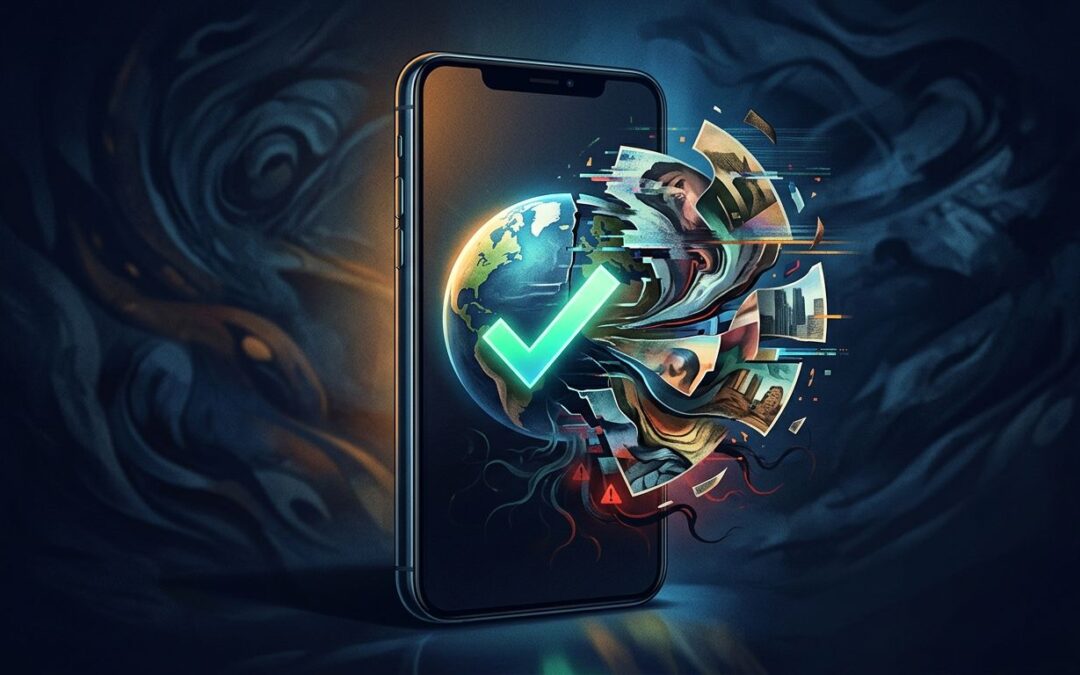
A verified badge can sit beside a false claim, a manipulated image, or an invented statistic, which is why verified social accounts misinformation remains a significant challenge for digital literacy. The checkmark may look like a seal of approval, but it rarely confirms the truth of every post.
Social media misinformation spreads because people treat identity signals as evidence. Platforms also reward speed, reaction, and repetition. We need a better habit: verify the claim, not the account.
Key Takeaways
- A badge can confirm identity, subscription status, or account authenticity, but it does not protect against social media misinformation or prove factual accuracy.
- Misinformation is false or misleading content shared without clear intent to deceive. Disinformation involves deliberate deception.
- Verified accounts can spread mistakes, satire, opinions, and coordinated falsehoods, meaning that source authenticity does not guarantee that a claim is inherently true.
- We should check the original source, date, context, evidence, and corrections before considering our sharing intentions or posting content to our own feeds.
- A credible account can still be wrong. A small account can still be right.
A Verification Badge Is Not a Truth Certificate
The first problem is simple: the blue verification badge means different things on different platforms.
Older systems focused on identity verification and credential verification to confirm that an account belonged to a public figure, journalist, government agency, company, or other notable organization. The primary purpose was to prevent impersonation. The badge answered one question: Is this likely the real account?
That question still matters, but it does not answer a second, more critical question: Is this post accurate?
On X, a checkmark can be tied to a paid subscription, while on Meta platforms, account authentication can involve identity confirmation combined with subscription benefits. Other badges can indicate an official organization, a public figure, or an account that met an older authenticity standard. As these social media platforms evolve, their verification systems change, and the meaning of the badge often changes with them.
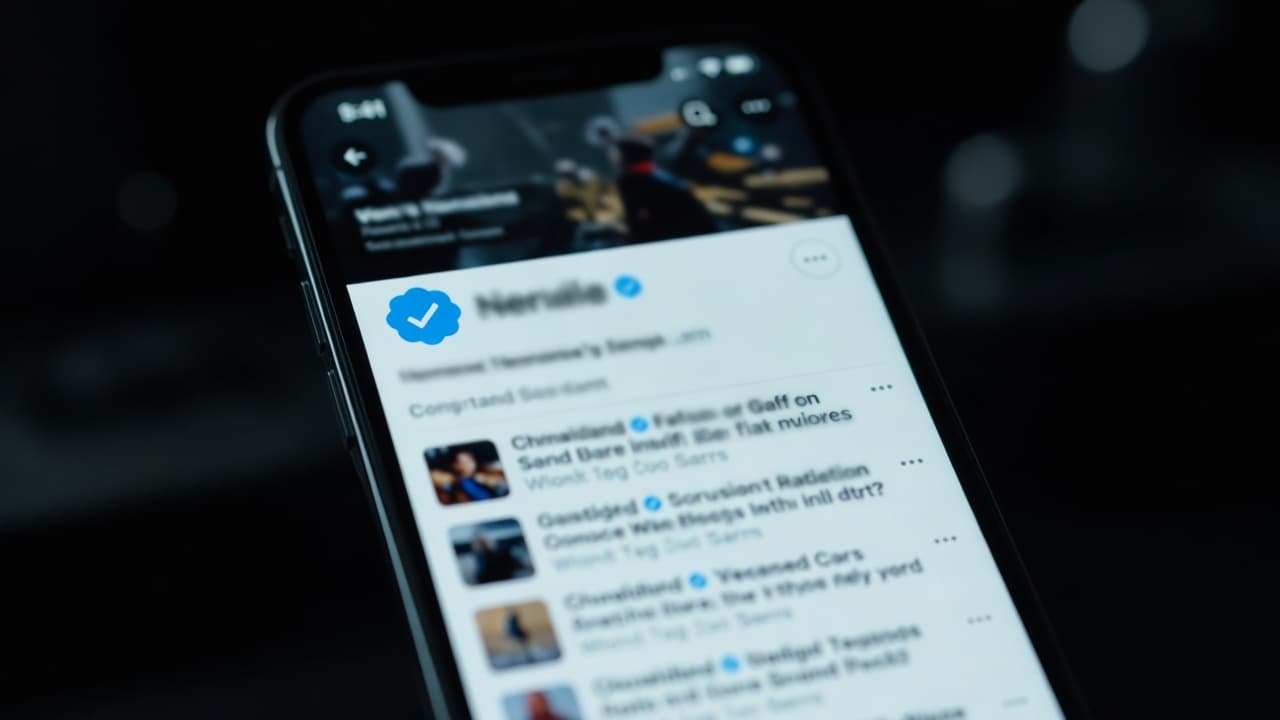
A platform may confirm who controls an account without reviewing each claim that the user publishes. Meta's misinformation policy describes rules for misleading content, but policy enforcement is not the same as pre-publication fact-checking, and verifying an identity is not the same as confirming source authenticity.
The distinction is easy to miss because the badge carries institutional weight. It resembles a government seal, a newsroom credential, or a quality mark. People often see the symbol before they evaluate the source, the evidence, or the publication date.
That mental shortcut changes how information moves. A false post from a verified account may receive more attention, more screenshots, and more coverage than the same claim from an unknown account. The badge adds a layer of perceived confidence before the evidence even appears.
Verification can tell us who posted something. It cannot tell us whether the post is true.
Verification also does not prove that an account holder is an expert. A famous athlete may comment on public health, a business executive may post about election procedures, or a politician may make a claim about a court ruling. Identity is real, but expertise and accuracy still require separate, independent checks.
Why False Claims From Verified Accounts Spread Faster
A verified account can spread false information through ordinary human error. No conspiracy is required.
A person may misread a report, repeat an outdated number, misunderstand a legal decision, or post before a developing story is confirmed. The account may later correct the mistake, but the first version often travels farther. Screenshots preserve the original claim even after the post changes or disappears.
The NIH review of social media bots documents how automated bots can help distribute misinformation and increase its reach, though many users now rely on bot detection technology to spot these patterns. Bots are not the only problem. Real users copy, quote, endorse, and react to claims that already look popular on various social media platforms.
Engagement creates another shortcut. A post with thousands of likes can appear established, even when those reactions show only that people saw it. A claim can gather momentum on social media platforms before anyone checks the underlying document.
The process often looks like this:
- A verified account posts a dramatic claim.
- Followers repeat it because the account seems trustworthy.
- Other accounts add stronger language or remove important context.
- Screenshots reach people who never see the original post.
- News coverage reports the controversy, increasing the claim's visibility.
- Corrections arrive later, with less reach and less emotional force.
Algorithms can intensify each stage. Shocking, angry, and identity-driven posts often generate quick reactions. A careful correction usually asks people to slow down and read. The false claim asks them to react now.
We should also watch for coordinated activity. A verified account may be one part of a larger network of influencers, anonymous accounts, bots, partisan groups, or commercial pages exhibiting inauthentic behavior. The badge does not prove coordination, but it can give the network a trusted entry point.
This is one reason misinformation can seem larger than it is. Repetition creates familiarity. Familiarity starts to feel like proof.
The emotional frame matters too. A claim about fraud, censorship, corruption, danger, or betrayal, especially regarding election-year misinformation, can spread through an existing conflict before evidence is examined. Our related discussion of media division and moral decline looks at how conflict-driven narratives can pull attention toward blame before facts are established.
We should not treat every viral claim as a coordinated campaign. We should ask a narrower question: What evidence would confirm this claim, and has anyone shown it?
Misinformation, Disinformation, Mistakes, Satire, and Opinion
The label matters because intent and format change how we assess a post. False content is not always produced for the same reason, and understanding these nuances is key to spotting fake news.
| Category | What it means | What we should check |
|---|---|---|
| Misinformation | False or misleading content shared without clear intent to deceive | Whether the account corrects the error |
| Disinformation | False or misleading content shared deliberately as fake news to deceive or manipulate | Motive, coordination, timing, and repeated behavior |
| Mistake | An inaccurate statement caused by confusion, poor research, or incomplete information | The original source and any correction |
| Satire | Humor or parody not intended as a factual report | Whether the post was separated from its original context |
| Opinion | A viewpoint, prediction, or value judgment rather than a factual claim | Which factual statements support the opinion |
These categories can overlap. A commentator may offer an opinion built on a false statistic. A satirical headline may be reposted as news. A genuine mistake may become disinformation when an account learns the claim is false and keeps repeating it.
We should separate source credibility from message credibility. A verified journalist can publish an error, a verified politician can make a knowingly false statement, and a verified brand can repeat a rumor during a crisis. None of those cases turns the account into a permanent source of falsehood, but none deserves automatic trust either.
The reverse is also true. An unverified account may publish a correct eyewitness video or link to an original court filing. Lack of a badge does not make the evidence false.
The PIRG analysis of misinformation on social media describes how false content can look credible while circulating through familiar platforms. Appearance is part of the problem. A professional profile photo, a large follower count, a polished graphic, and a verification badge can all create what is often called the virtual lab coat effect, where we grant authority based on aesthetics rather than substance.
We must be wary of fake profiles and polished accounts that project authority without evidence. We should ask what the post is claiming, not how confident the account sounds.
A Practical Way to Check Claims Before Sharing
We don't need a newsroom budget to test a viral claim. Instead, we can rely on media literacy education as a foundational tool to build a repeatable process and enough patience to resist the first emotional reaction.
1. Capture the exact claim. Save the wording, link, screenshot, account name, and posting time. Don't fact-check a vague summary such as "They say the law changed." Write down the specific claim about the law, date, place, and consequence.
2. Separate facts from framing. A post may contain a real event wrapped in a false conclusion. It may show a genuine photograph with an incorrect date. It may quote a real sentence while hiding the paragraph before it. Break the post into checkable parts.
3. Find the primary source. Look for the court opinion, government data, company filing, research paper, public recording, full interview, or original image. Search for the document as a credential signature of the information instead of accepting a screenshot as proof.
The United Nations' guidance on verifying online information emphasizes checking information before sharing, especially during crises. Crisis conditions create gaps in reliable reporting, and false claims rush into those gaps.
4. Check dates and context. Old videos often return during new events. A real quote may belong to a different year. A preliminary number may be replaced by a final count. We should compare timestamps across the original source, reputable news reports, and official updates.
5. Compare independent reporting. Three posts copying the same sentence are not three sources. We should look for reporting that names its evidence and reaches the information independently. Using fact-checking organizations, public records, and direct statements can help, but we should read the supporting material instead of relying on a verdict label alone.
Research on social media platforms found that labels don't automatically stop people from sharing false content. The study on fact-checking effectiveness is a reminder that correction systems have limits. A label can help, but our own inspection still matters.
6. Check the account's correction history. Does the account link to evidence? Does it update posts when facts change? Does it acknowledge mistakes? Does it repeatedly make claims that disappear after criticism? Patterns tell us more than one badge.
Journalists and communications teams should preserve the original post before contacting the account. Record what changed. Link to the primary evidence. If a published claim was wrong, issue a clear correction rather than quietly editing the sentence.
The RAND database of disinformation tools offers resources for researchers, educators, and organizations assessing online manipulation, including techniques for bot prevention. Tools can help us investigate, but no tool replaces individual judgment about evidence and context.
Frequently Asked Questions
Does a verification badge mean that a post is factually accurate?
No. A verification badge primarily confirms the identity of an account holder or their subscription status, but it does not function as a fact-check or a certificate of truth. Platforms verify who you are, not whether the information you publish is correct.
Why do false claims from verified accounts travel so far?
Verified accounts benefit from high levels of perceived trust, which encourages followers to share information without skepticism. Because these accounts often have large, active followings, their claims reach more people quickly, allowing misinformation to gain momentum before any corrections can be issued.
If I see a post from a verified expert, should I assume it is true?
Not necessarily. Even experts can make mistakes, share outdated information, or comment outside their specific field of expertise. You should evaluate the evidence provided in the post itself rather than relying on the account's credentials or status as an authority figure.
How can I verify a claim if the source is a verified account?
Treat the claim as separate from the account by searching for primary sources, such as official documents, court records, or original reporting. Check if the information is corroborated by independent sources and verify that the date and context of the claim are current.
Conclusion
A verification badge serves as an identity verification tool, not a guarantee of accuracy or a fact-checking result. While mandatory identity verification helps confirm the authenticity of a person, organization, or subscription status, it does not validate the truth of the statements being made. Relying on these symbols to establish public trust is a common pitfall in today's digital landscape.
We can respect a source's identity without blindly accepting its conclusions. As we navigate various social media platforms, it is essential to look beyond symbols and focus on source credibility. When a verified account shares a shocking claim, we should slow down, verify the original evidence, check dates, compare independent reporting, and look for corrections. By being proactive, we can better distinguish between expert analysis and fake news. The checkmark may explain who spoke, but the evidence remains the only reliable metric for deciding whether to believe them.