
To check an OSHA inspection claim, find the workplace's inspection record, match the dates and identifiers, and read any citations through their latest status. OSHA inspection records can establish what the agency recorded, but a search result alone rarely supports every detail in a headline.
We start with the specific claim: an inspection occurred, a violation was cited, or a penalty became final. Those statements require different evidence, so the first step is to separate them.
Key Takeaways
- A complaint, an inspection, and a citation describe different stages of OSHA activity. A record of one doesn't establish that the others occurred.
- Search OSHA's Establishment Search using the employer, workplace location, and relevant dates. Match the physical site and identify whether federal OSHA or a state-plan agency holds the records.
- Check a citation's status and documents before describing it as final. Proposed penalties, current penalties, and amounts paid are different facts.
- OSHA inspection files can contain evidence beyond the database summary, but disclosure may be limited by exemptions or an open case. Keep the search trail and state what remains unresolved.
1. Define the claim before searching
Separate inspections, complaints, and citations
A complaint reports a concern. An inspection documents agency activity. A citation identifies an alleged violation and may propose a penalty. An investigation can involve interviews, records review, sampling, and other evidence gathering.
These stages can overlap, but they aren't interchangeable. A complaint doesn't establish that an on-site inspection occurred. An inspection doesn't establish that OSHA issued citations. A citation may later be contested, amended, or withdrawn.
Save the claim's wording, publication date, workplace address, employer name, and any inspection number. Keep the event date separate from the article date.
Identify the responsible agency
Federal OSHA and state-plan agencies don't maintain one complete, interchangeable case file. OSHA's state-plan directory identifies approved state programs, including Cal/OSHA.
State-plan inspection information may appear in OSHA's enforcement database, but the state agency maintains its own records. Requests for those files generally follow state public-records procedures rather than federal FOIA.
Identify the records holder before choosing the request process. A federal search is useful, but it isn't the whole record.
2. Find the right workplace record in OSHA’s database
Start with OSHA's Establishment Search. You can search by company name, inspection or activity number, NAICS or SIC industry code, and site ZIP code.
The default look-back period is five years. You can select a date span of up to ten years, including older periods. This limit applies to the search window, not to the availability of every record older than ten years.
Follow this sequence:
- Search the employer's name and location, then try a distinctive name fragment, former name, or legal operating name.
- Adjust the inspection dates around the reported event. The inspection date and citation date may be months apart.
- Match the physical workplace, city, and address. A corporate office or another branch may share the same name.
- Open the Activity Number, then any Citation ID under the violation items.
Keep industry filters broad until you've identified the site. A NAICS or SIC code describes operations, not whether a violation occurred.
Results can vary because of name variations, location choices, date boundaries, and record-update delays. Newly reported activity may not appear right away.
An empty result means only that your search returned nothing. If a credible claim includes a date, address, or case identifier that the database doesn't resolve, an OSHA records request may be appropriate.
3. Read citations, penalties, and case status
Follow the violation fields
The Activity or Inspection Number tracks the case. A Citation ID leads to a particular violation item. One inspection can contain several items.
Read these fields together:
| Field | What it tells you |
|---|---|
| Activity or Inspection Number | The identifier for the inspection file |
| Violation type | Willful, Repeat, Serious, Other, or Unclassified |
| Initial Penalty | The initially proposed amount |
| Current penalty | The amount reflected after recorded changes |
| Abatement date | The required correction date, not proof of completed correction |
| Contest Date | Whether and when a contest was recorded; employers generally have 15 working days after receipt to contest |
A serious violation involves a substantial probability of death or serious physical harm. A willful violation involves intentional disregard of, or plain indifference to, safety requirements. For a line marked Serious, read the cited standard and item description before describing the hazard.
OSHA citations shouldn't be described as final findings until you check the inspection status for contests, amendments, settlements, or final orders. Check notices and amendments from the area director, then review any settlement or final order.
The summary field is a lead. The underlying document supplies the detail.
Keep penalty amounts in their proper stage
A proposed penalty, a settled penalty, and money actually paid are different facts. The current penalty can differ from the Initial Penalty after settlement. It doesn't, by itself, establish payment.
OSHA's 2025 penalty adjustment set the serious-violation maximum at $16,550. The willful or repeat maximum was $165,514 per violation. Those are 2025 ceilings, not automatic assessments or a statement of later-year limits.
OSHA guidance allows up to a 25% good-faith reduction and a 15% Quick-Fix reduction where eligible. Quick-Fix doesn't apply to willful violations. Eligibility and calculation rules matter, so don't simply subtract 40% from a headline amount.
4. Understand what the inspection file can reveal
Look beyond the database summary
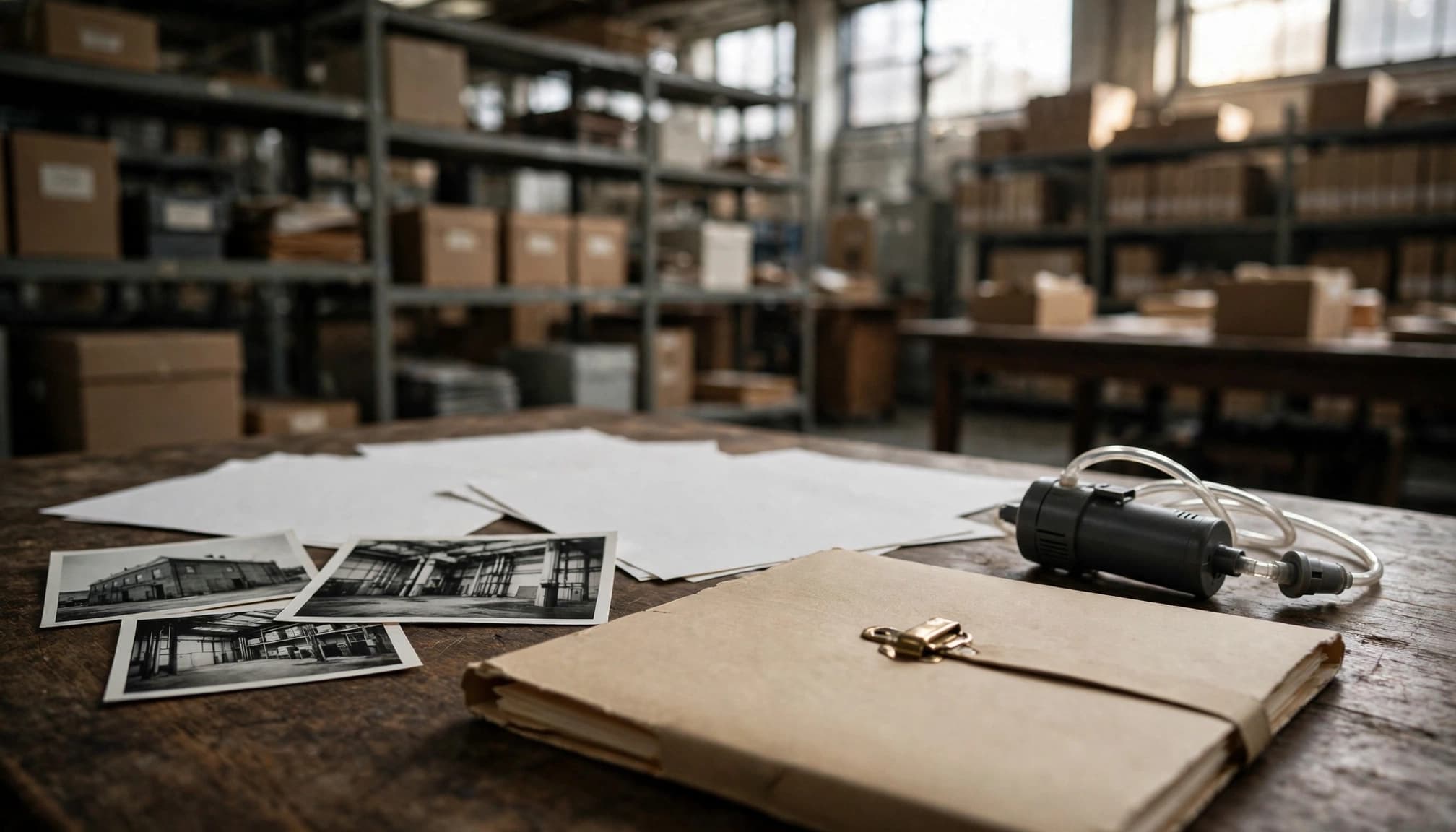
Illustrative records-review scene, not documents from a particular inspection.
An inspection file can include diary sheets, compliance safety and health officer (CSHO) notes, records from the opening conference and closing conference, witness statements, photographs, air-sampling sheets, and employer records. It may contain an OSHA 300 log and OSHA Forms 300, 300A, and 301, which concern work-related injuries and illnesses.
OSHA inspection records can show what inspectors observed, what witnesses reported, and what evidence supported a citation. Not every file contains every category.
Under 29 CFR 1904.40, employers must provide requested Part 1904 records to authorized government representatives within four business hours. That employer-production rule isn't a four-hour public-access deadline.
Expect disclosure limits, even after closure
Records from completed cases are generally available under the Freedom of Information Act, subject to exemptions and redactions. Citations, penalties, and abatement statuses are commonly public.
Access depends on inspection status, requester status, and the information requested. Employers, employees, and third parties don't necessarily have identical access rights under applicable rules.
OSHA's inspection-file disclosure guidance addresses these limits. Exemption 4 can protect confidential commercial information. Exemptions 6 and 7(C) can protect personal privacy. Exemption 7(A) can protect information whose release could interfere with ongoing enforcement.
Closing a case doesn't erase every protection. Our explanation of FOIA exemptions and withheld records distinguishes limited redactions from broader withholding.
5. Request the records that answer the unresolved claim
When the database lacks documents needed to assess a claim, use OSHA's FOIA request guidance to submit FOIA requests. Direct a request for the inspection file to the regional FOIA coordinator responsible for the establishment's location.
A focused request identifies the employer, street address, city, state, inspection dates, and Activity Number. Ask for existing records rather than asking OSHA to investigate your question.
A request can be framed this way:
Please provide existing records in the inspection file for the identified establishment and Activity Number, including citations, amendments, settlement agreements, abatement documentation, inspection notes, photographs, sampling records, and records from the closing conference. This request seeks existing records only and does not ask OSHA to investigate. Please release reasonably segregable nonexempt portions and identify the basis for any withholding.
Add a working email address, request electronic delivery, and set a fee limit. Federal FOIA has no filing fee, but allowable processing charges can apply. Our guide to filing a FOIA request explains how to turn a news citation into a clear record description.
An open case can limit disclosure without making every record secret. Ask for releasable portions now. If withholding rests on interference with pending proceedings, a later request after proceedings end may produce more material.
The ordinary federal deadline is 20 working days for a determination after the proper office receives the request. Statutory unusual circumstances can permit ten additional working days. Neither period guarantees delivery of the complete file.
Preserve the acknowledgment and tracking number. For an adverse determination, use the response letter's appeal instructions. An unsuccessful search, a redaction, and a withheld file are different outcomes.
6. Put citation deadlines on the timeline
A citation is part of a process. Its legal status can change after the first news report.
Employers have 15 working days after receiving a citation to contest a citation. The 15 working days run from receipt, not issuance. Record both dates when assessing whether the contest was timely.
Citations must be posted for three working days or until the hazard is corrected, whichever is longer. Correcting a hazard immediately doesn't prevent OSHA from citing the violation.
The area director issues citations, rather than the inspecting officer making a final decision at the workplace. The area director's citation date may differ from the inspection date. OSHA generally must issue a citation within six months of the violation.
These dates help explain why an inspection may appear before citations do. They also explain why an early report and a later case record can contain different penalty amounts without either having fabricated the number.
Abatement deserves separate attention. A correction deadline isn't evidence that the employer met it. Where the claim concerns a fixed hazard, look for abatement certification, supporting documentation, or later agency action.
7. Preserve a finding someone else can retrace
We keep the search trail alongside the conclusion. Save the search terms, date range, access date, workplace address, Activity Number, citation documents, and relevant pages.
If records disagree, compare their dates and versions. A press release may describe proposed penalties while a later settlement records a reduced amount. A database refresh date doesn't establish when every underlying event occurred.
Use language that fits the evidence. "OSHA inspected the site," "OSHA proposed a penalty," and "the citation became final" describe different findings. Don't flatten them into one claim that the employer was found responsible for everything alleged.
The same discipline applies when comparing news reports with source documents. Several articles repeating one agency announcement don't provide several independent confirmations.
When the record remains incomplete, say what is available and what remains unresolved. Missing information belongs in the finding, not behind it.
Frequently Asked Questions
How do I find an OSHA inspection record?
Start with OSHA's Establishment Search and search by employer name, location, inspection number, or other available identifiers. Confirm the physical workplace and adjust the date range, since a search result may not include newly reported activity or every older record.
Does an OSHA inspection record prove that a violation occurred?
No. An inspection documents agency activity, while a citation identifies an alleged violation and may propose a penalty. Check for contests, amendments, settlements, or final orders before describing a citation as final.
Does the current penalty show how much the employer paid?
No. The initial penalty, current penalty, and amount paid are separate facts. A current penalty can reflect recorded changes, but it doesn't by itself establish payment.
How can I request an OSHA inspection file?
Use OSHA's FOIA guidance and direct the request to the regional FOIA coordinator responsible for the establishment's location. Include the employer, site address, relevant dates, and Activity Number, and ask for existing records; some information may be withheld or redacted.
How long does an employer have to contest an OSHA citation?
An employer generally has 15 working days after receiving a citation to contest it. The period runs from receipt, not the citation's issuance date.
Keep the claim tied to the record
Agency records are most useful when identity, dates, and case status stay attached to them. We trace the workplace, follow the citation, and separate proposed action from final outcomes.
A careful finding leaves a clear evidence trail. It shows what the agency recorded without turning a database gap or an unfinished case into a conclusion the documents can't support.