
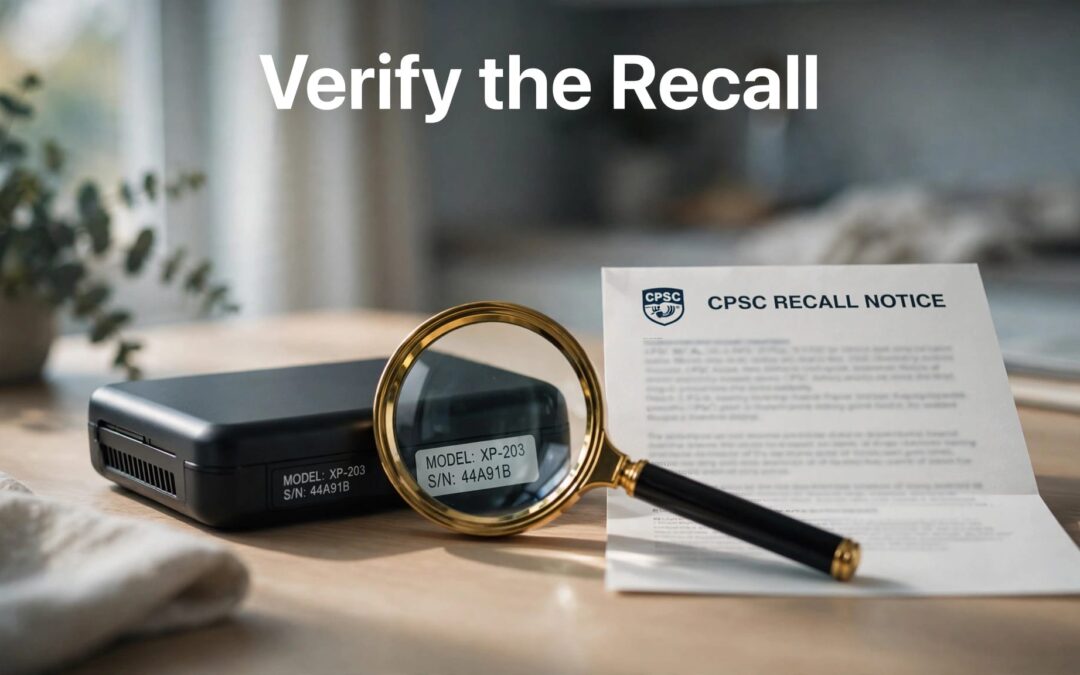
To verify a product recall claim, find the original Consumer Product Safety Commission (CPSC) notice and match its identifiers to the product you own. The notice identifies covered consumer products, the reported hazard, and the action consumers should take.
A familiar brand or matching photo isn't a complete safety finding. We look for a complete match before treating a recall headline as a finding about an individual product. Start with the CPSC record, then compare the details a repost may have dropped.
Key takeaways
- Match model numbers, serial ranges, and production dates, not just names or pictures.
- Read the hazard and remedy separately. A warning doesn't necessarily include a company-backed recall.
- Incident counts describe reported events. They don't establish the chance that your product will fail.
Find the original CPSC notice
The Consumer Product Safety Commission (CPSC) is an independent federal agency created by Congress under the 1972 Consumer Product Safety Act. It began operating in 1973. The agency protects the public from an unreasonable risk of serious injury or death across more than 15,000 types of consumer products.
Start with the agency record
Use the CPSC recall and warning search to verify a product recall by brand, product name, and manufacturer. Retail branding and company names can differ.
Open the full record instead of relying on a search excerpt. Compare the release date, recall number, product description, and consumer contact information. Look for later recall expansions or changed remedies.
A screenshot can preserve an old notice while missing updates. The date on a repost tells you when someone shared it.
Separate a recall from a warning
A recall generally includes a firm's corrective action, such as repair, replacement, or refund. A warning may tell consumers to stop using a product without an agreed remedy.
Both deserve attention, but they establish different things. A warning shouldn't become a promised refund when someone rewrites the headline.
Match the notice to the product you own

Compare identifiers before appearance
Find the model number, serial number, lot code, or manufacturing date on the product label. Compare every identifier the notice uses. Labels may be underneath a product, inside a battery compartment, or on its packaging.
Treat photos as supporting evidence. Similar-looking products can have different internal parts. Different colors can belong to the same recalled model.
For the Kobalt recall discussed below, the USB-C battery is an identifying feature. Brand and voltage alone don't define the affected group.
Read dates and ranges carefully
A notice may distinguish manufacturing dates from sales dates. Those describe different events. A purchase outside the listed sales period doesn't automatically resolve a match, especially for secondhand products.
Compare complete model numbers, including suffixes. Read serial-range boundaries and any exceptions. A missing label leaves uncertainty, not evidence that the item is unaffected.
We apply the same discipline when checking FDA device claims: a real regulatory record supports a claim only within its stated scope.
Three 2026 notices that show why details matter
These examples show how a shortened claim can omit the condition that determines your next step.
Kobalt tools: the battery and charging method matter
The July 9 Greenworks recall of Kobalt yard tools covers approximately 554,780 units involving 24V and 48V tools with USB-C batteries.
Greenworks received 34 reports of batteries smoking, sparking, or catching fire while charging through USB-C inside a tool. No injuries or property damage were reported.
The notice directs consumers to stop that charging method and get a free replacement battery without a USB-C port. Saying every Kobalt tool was recalled would go beyond the notice.
Sauna360: an earlier repair may no longer settle the issue
The September 17 expansion covers approximately 6,000 Tylö Halmstad and Kiruna Hybrid saunas. Sauna360 reported 77 additional bench-breaking incidents and six injuries.
The earlier repair was ineffective. The updated notice directs consumers to stop using affected saunas, including those repaired under the 2025 recall.
The new remedy is a free professional repair with additional bench hardware and supports. An older article about the original fix leaves out the changed instruction.
Meisinuo insoles: a warning without an agreed remedy
CPSC's July 9 warning identifies Meisinuo heated insoles with internal lithium-ion batteries. The agency listed 17 reports of fires, explosions, and other thermal incidents; at least 15 people sustained a burn injury.
Consumers were told to stop using them immediately. The seller hadn't agreed to a recall or consumer remedy.
The warning calls for disposal through local hazardous-waste procedures, not household trash, curbside recycling, or ordinary retail battery-collection boxes.
Read incident counts without turning them into odds
CPSC notices commonly identify units, reported incidents, injuries, and the hazard. Each field answers a different question.
"Units" describes the estimated affected population. It doesn't establish how many remain in use. Reports describe events brought to a company's or agency's attention, and reports may be incomplete.
We wouldn't divide Kobalt's 34 reported incidents by 554,780 units and present the result as your personal fire risk. Use conditions, exposure time, and reporting completeness aren't captured by that calculation.
"No injuries reported" describes the record available for the notice. It doesn't cancel the stated hazard.
Our guidance on tracing statistics to original sources follows the same principle: preserve what a number measures before drawing conclusions.
What to do after the product matches
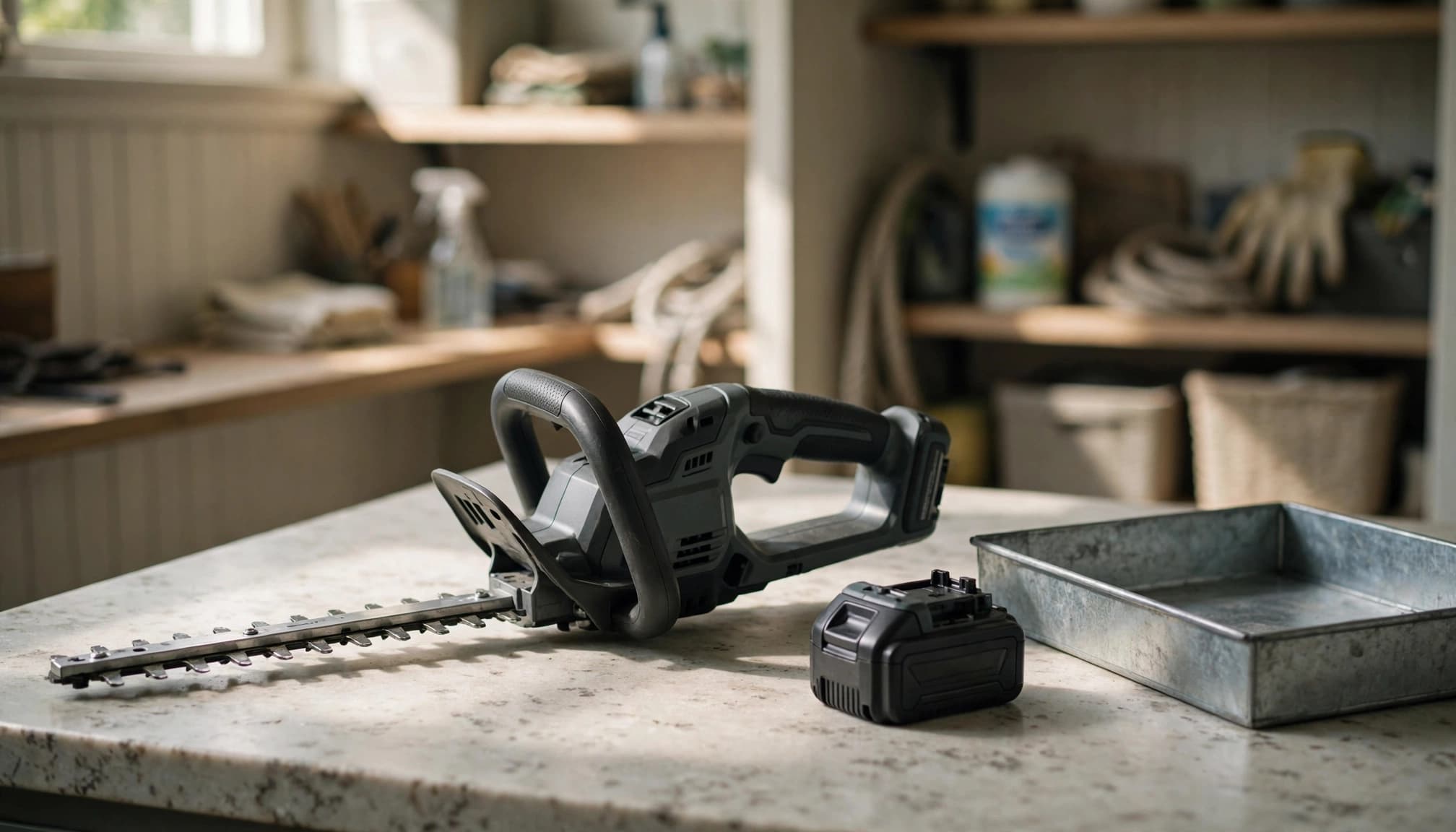
Follow the notice's instructions rather than improvising a repair. Some notices require stopping all use. Others identify a prohibited charging method or a particular component.
- Follow the stated stop-use or charging restriction immediately.
- Save the notice, label photographs, purchase information, and correspondence.
- Use the contact details in the official notice to request the stated remedy.
- Follow the product-specific return or disposal instructions.
Don't test a suspected defect to see whether it happens again. Don't dismantle, puncture, or mail a lithium-ion battery unless the official instructions provide an appropriate process.
Consumers can report a dangerous product or product-related injury through SaferProducts.gov. CPSC's consumer reporting guidance also lists the hotline, 1-800-638-2772, and TTY line, 800-638-8270. Include identifiers, what happened, and any safety concerns.
The notice's remedy and an incident report serve different purposes. Asking a company for a remedy doesn't automatically submit a product-related injury report to SaferProducts.gov.
What companies and sellers must do
Potential hazards carry a reporting duty
Manufacturers, importers, distributors, and retailers must notify CPSC immediately after obtaining reportable information. The agency's reporting responsibilities guidance interprets "immediately" as within 24 hours.
Information reasonably suggesting a dangerous defect can trigger that duty before a company proves the defect exists. A later investigation may find no defect. Waiting for certainty can still miss the reporting obligation.
This includes information that a product may pose an unreasonable risk of serious injury or death. Companies that fail to report can face civil penalties. Reporting a concern doesn't itself establish that a recall is required.
Corrective action includes notice and follow-through
If a company doesn't undertake a voluntary recall, CPSC can order one through its statutory process.
Public notice can include news releases, social media, point-of-sale posters, and letters to consumers and retailers. The firm may need to repair or replace affected products, maintain recall records, and provide periodic updates to the agency.
Federal law prohibits any person from selling products subject to a Commission order or a voluntary recall undertaken in consultation with CPSC. That includes secondhand sales. The agency's recall handbook describes the corrective-action framework.
"Voluntary" describes how corrective action proceeds. It doesn't make the hazard optional for sellers to address.
Keep FDA and vehicle rules separate
A claim can name a real agency rule and still apply it to the wrong product.
The FDA's recall classifications describe relative health hazards. Class I means a reasonable probability of serious adverse health consequences or death. Class II concerns temporary or medically reversible effects, or a remote probability of serious consequences. Class III means adverse health consequences are unlikely, although the product violates FDA requirements.
Those recall classes are separate from FDA's risk-based classes for medical-device types. Neither system should be pasted onto CPSC notices.
Vehicle reporting also follows a different clock. NHTSA requires manufacturers to report within five working days after determining that a safety-related defect exists, as its Hyundai enforcement agreement explains. That deadline doesn't replace CPSC's immediate-reporting requirement.
Frequently asked questions
Does a matching photo prove a product is recalled?
No. A photo helps identify shape, color, and label placement. Coverage depends on the notice's identifying details, which may include model numbers, production dates, or serial ranges. A visual resemblance alone leaves the match incomplete.
Does the absence of a recall prove a product is safe?
No recall found means the search didn't locate one. It doesn't establish safety. New hazards may not yet have produced a recall. We distinguish a missing record from a supported safety conclusion.
How does CPSC assess whether a hazard is serious?
The agency considers the defect and the risk it presents, including possible injury severity and exposure. Reported injuries inform that assessment, but injuries aren't a prerequisite for action. A credible fire or entrapment hazard can warrant action before someone is hurt.
Keep the conclusion within the notice
A supported recall claim connects the original notice, the product's identifiers, and the prescribed action. A missing link leaves an unresolved question.
We give the notice weight without stretching it into a verdict about every product carrying the brand. Once your product matches, follow the stated instructions. The useful conclusion is narrow and actionable: this product is covered, and this is the required response.