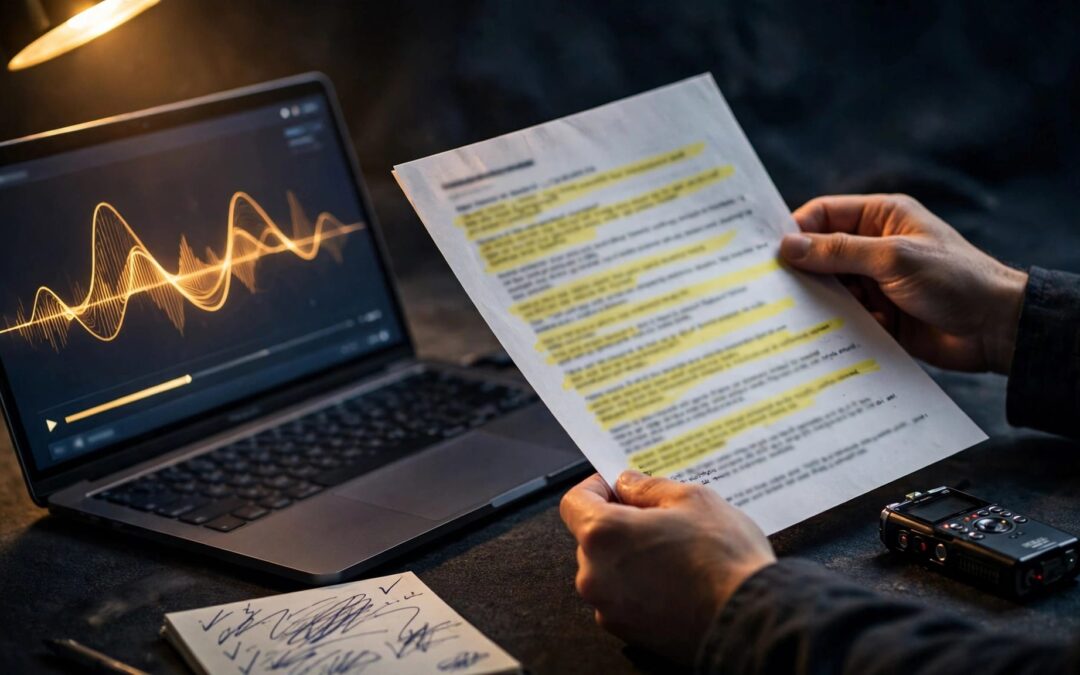
A quote can be word-for-word accurate and still give the wrong impression. A clipped line travels fast. The fuller exchange usually travels later, if at all.
To verify press conference quote claims responsibly, you need more than a screenshot or a clean transcript excerpt. You need the recording, the surrounding remarks, a timestamp, and a record of which transcript version you checked.
The work is slower than sharing a clip. That is the point.
Key takeaways
- Start with the closest available primary record, usually official video, audio, or a government transcript.
- Treat every transcript as a useful copy, not an error-free substitute for the recording.
- Preserve the words exactly, including qualifications, corrections, and sentence breaks.
- A shortened quote is not always deceptive. It becomes misleading when it removes the part that changes the speaker's meaning.
- Separate two questions: Did the speaker say it, and was the statement true?
The strongest correction does not replace one selective quote with another. It shows the complete exchange and lets the evidence set the limit.
How to verify a press conference quote
Begin by identifying the event before you search for the sentence. Write down the speaker, date, location, hosting organization, and approximate subject. A press conference, a campaign rally, a formal address, and a hallway exchange can produce similar clips but leave different records.
Search for the full event, not only the viral wording. If the remarks came from a White House event, check the White House remarks archive and look for official video or a transcript posted with the event.
Prefer the recording over the text
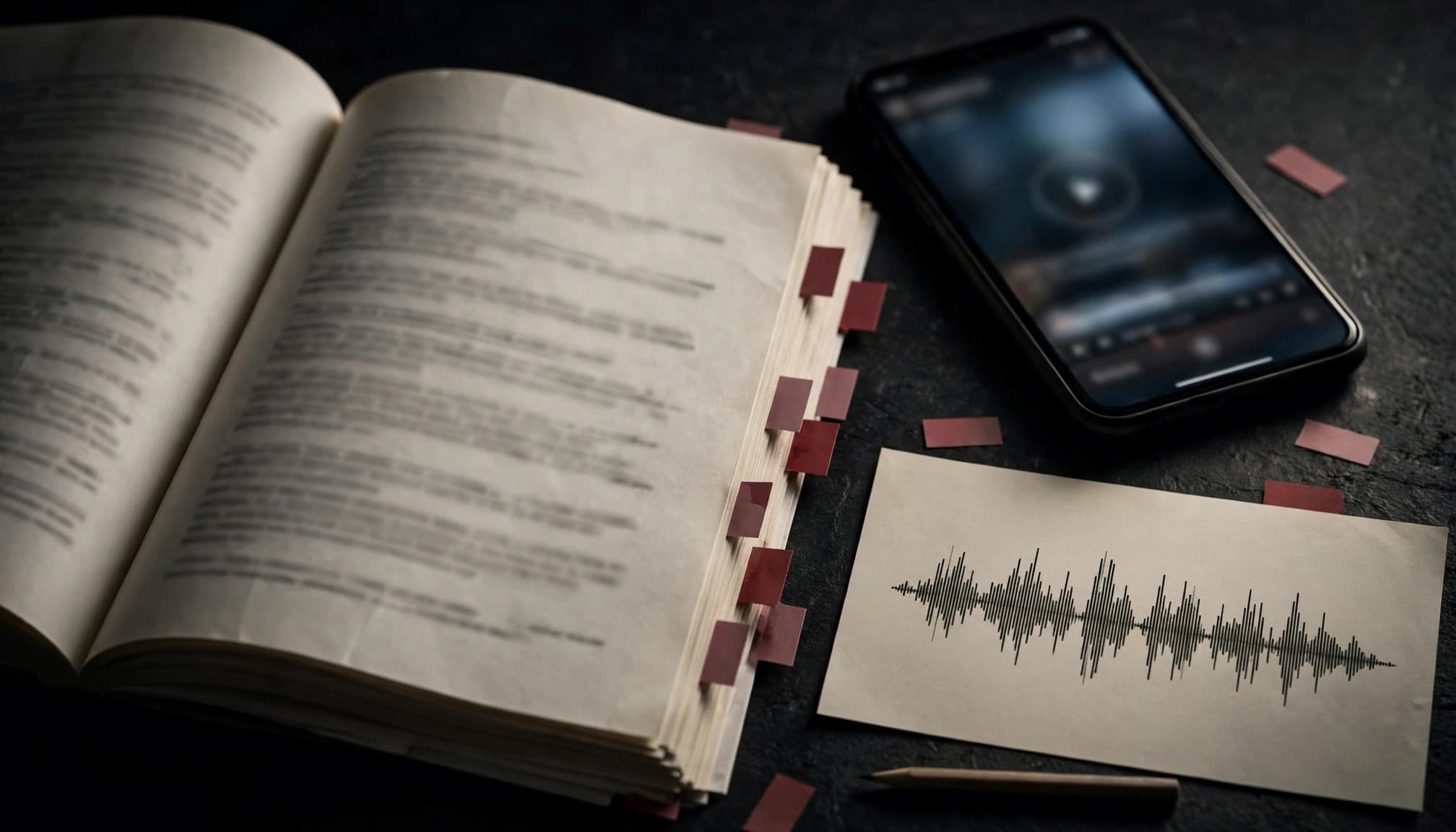
Audio and video let you hear pauses, interruptions, laughter, corrections, and questions from reporters. A transcript may flatten all of that into a neat block of prose.
Watch enough material to establish the exchange. Thirty seconds before and after the disputed sentence is often a useful starting point. Expand the window when the speaker refers back to an earlier question or answer.
Official recordings can also be edited after publication. Note the upload date, the account or institution that posted it, and whether the video appears complete.
Save the first version you find
Do not rely on a page staying unchanged. Save the URL, capture the title, and record the date and time you accessed it. If policy permits, download the video or preserve a copy of the relevant segment.
Write the timestamp in a clear format, such as 18:42 to 19:18. A timestamp gives editors and readers a way to retrace the path. "Near the middle of the video" does not.
Locate the fullest available transcript
A transcript can speed up the search. It can also introduce mistakes. Automated captions mishear names, numbers, acronyms, and words spoken over applause. Human transcripts can omit false starts or repair grammar without saying so.
Check who published the text. Is it an official office, a news organization, a court-style transcript service, or an automated tool? Those sources are not interchangeable.
For events that lack a government transcript, Factbase's video and transcript listings can help locate parallel records. Its listing for Donald Trump's September 10, 2026 remarks at the National Medal of Honor Museum in Texas, for example, includes both video and a transcript option.
Third-party text can still be valuable. A Rev transcript of Trump's "Save America" speech shows how searchable transcript services make long remarks easier to inspect. It should not be treated as proof until it matches the recording.
Keep a short source note with:
- The transcript publisher, page title, URL, and access date.
- Whether the page labels the text as official, edited, automated, or corrected.
- The recording source and the exact timestamp for the quoted passage.
- Any version date, update notice, or visible change to the page.
Read the quote in its full context
Context is not a demand to excuse a speaker. It is the material needed to report what was said fairly. A sentence can be blunt, evasive, or wrong while still meaning something narrower than a viral post claims.
Check what comes immediately before and after
Find the quote in the transcript, then read at least one complete question and answer around it. Look for conditions such as "if," "unless," "at this point," or "based on what I've seen." Those words may be the boundary of the claim.
Then check whether the speaker was answering a specific allegation. A reply about one agency, one date, or one policy proposal should not become a claim about every agency, date, or policy.
On March 13, 2020, President Trump was asked at a White House coronavirus briefing about the pandemic response office. He replied, "I don't take responsibility at all." That exact line is newsworthy. A careful account also identifies the question that prompted it and the discussion that followed. Reporting only the line proves he said it. It does not prove every broader interpretation attached to it.
Distinguish shorter wording from missing meaning
Shortening is common and often necessary. A reporter may remove repetition, throat-clearing, or a long detour without changing the central point.
The problem begins when an omission reverses or narrows the meaning. If a speaker says, "I support the proposal if Congress funds it," quoting "I support the proposal" removes the condition. If the speaker says, "I have not seen evidence yet," quoting "I have seen evidence" changes the claim entirely.
We should also preserve interruptions. A reporter's question may supply a fact the speaker never endorsed. An audience reaction may cover a word. A moderator may correct the premise before the answer continues.
For a broader habit of watching how framing shapes a claim, see our guide to fact-checking divisive news narratives.
Compare the transcript with the audio or video
Once you have the likely passage, play it again while reading the transcript. Do not trust your memory after one viewing. Small wording differences can carry the whole dispute.
Verify words, boundaries, and speaker labels
Check contractions, negatives, names, and numbers first. "Can" and "can't" are only one sound apart in rushed audio. So are "we did" and "we didn't." A missing "not" is not a minor transcription error.
Listen for where one sentence ends and another begins. A transcript may place a period where the speaker paused only to gather a thought. It may join two separate answers. Speaker labels also matter when a reporter's words appear beside an official's response.
Use quotation marks only for words you can support. If you clean up grammar for readability, use paraphrase instead and say so plainly.
Mark uncertainty instead of filling gaps
When the audio is muffled or two people speak at once, do not guess. Mark the passage as unclear, then seek a second recording, a different camera angle, or another reputable transcript.
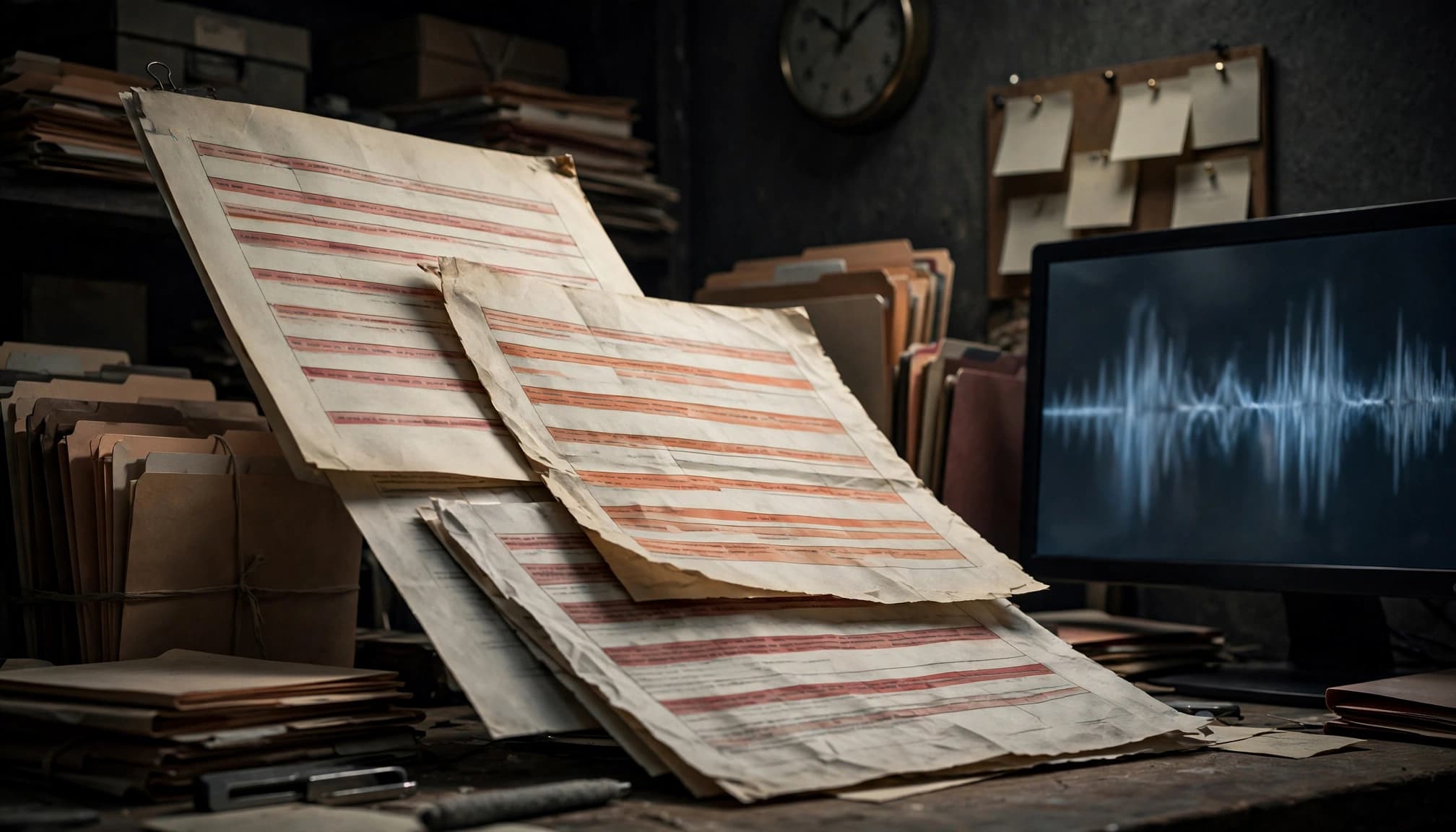
An annotated transcript can flag claims worth checking, but it is still a secondary interpretation. CNN's annotated full transcript is useful for seeing how a newsroom separates quoted remarks from its explanatory notes. Return to the underlying recording before adopting either the wording or the annotation.
Separate quote accuracy from claim accuracy
A verified quote only answers whether the speaker said those words in that setting. It does not establish whether the underlying claim was accurate.
That distinction keeps corrections honest. "The quote is authentic" and "the statement is true" are different findings.
Check the factual claim on its own evidence
If the speaker cites an election rule, a budget figure, a court decision, or a public-health statistic, locate the underlying record. Use official documents, primary data, court filings, or named subject-matter sources.
Independent fact-checking can help identify claims that need this second step. PBS's fact-check of a politically charged presidential speech separates what was said from evidence used to assess it. That is the right order: establish the words, then test the claim.
Do not write that a speaker "admitted," "proved," or "confirmed" something unless the full statement supports that stronger description. "Said," "claimed," "argued," and "acknowledged" have different meanings.
Match the conclusion to the evidence
Use precise findings. "The clip omits a condition stated in the next sentence" is stronger and fairer than "The clip is fake" when the audio is real but incomplete.
If records conflict, say that. If a word cannot be heard, say that too. Certainty should follow the evidence, not the audience's expectation.
Keep an audit trail that others can check
Verification should leave a trail. An editor, colleague, or skeptical reader should be able to reach the same passage without relying on your private memory.
Build a compact verification note
Keep the note close to the claim. Include the exact quote, the full relevant exchange, the timestamp, the transcript source, the recording source, and the date you checked both.
Also record the transcript version. If a publisher updates the page, save the earlier text or note the revision time. A later correction can resolve an error, but it can also make an earlier citation hard to reconstruct.
Write corrections without overstating them
Lead with the supported finding. For example: "The video confirms that the speaker used these words at 18:42. The shared clip begins after the reporter's question and ends before the speaker's stated condition."
Link to the fullest record available. If you use an edited excerpt, identify its start and end points. If the issue concerns a disputed factual claim, add the documents that bear on it.
A correction should reduce confusion, not create a new shortcut. It should preserve the quote, reveal the missing context, and stop where the record stops.
FAQ
Is an official transcript always accurate?
No. Official transcripts are often the best available text record, but they can contain typos, omissions, late corrections, and editorial cleanup. Check disputed wording against official audio or video whenever possible.
If the recording and transcript disagree, report the difference. Do not silently pick the version that best fits a preferred conclusion.
How much context is enough?
There is no fixed number of seconds. Start with the full question and answer, then expand outward until you can identify the subject, conditions, and referents in the speaker's words.
A short quote may be fair when the statement is complete on its own. It is not fair when the omitted material changes who, what, when, or under what condition the speaker meant.
Can a fact-checking article replace the original record?
No. A fact-check can add reporting and evidence, but it is not the original event. Use it to test factual claims and locate useful documents, then check the speech, video, or transcript yourself.
CBS News's election-security speech fact-check illustrates the separate task of evaluating a president's claims after identifying what was said.
The full record is the standard
A press conference quote is not verified because it sounds familiar or matches a headline. It is verified when the words, speaker, setting, timestamp, and surrounding exchange line up.
The best corrections are often modest. They show what the record supports, identify what it does not, and leave less room for a clip to become a conclusion.