

We do not lose local news trust all at once. It slips away when readers keep seeing the same gaps, fewer reporters, blurrier labels, and stories that feel imported instead of home-grown.
When a school board meeting gets summarized by wire copy or a neighborhood problem gets framed like a debate from national news, people notice. They may not know every detail behind the budget constraints at local news outlets, but they feel the distance in their own local community. That gap is where suspicion grows.
We can rebuild trust, but only if we name the reasons it broke first.
Key Takeaways
- Local presence is vital: Readers can distinguish between authentic, home-grown reporting and imported, generic content; a physical presence in the community is essential for building and maintaining trust.
- Transparency builds credibility: Clearly separating news from opinion, owning up to mistakes through visible corrections, and showing the research process behind stories helps combat the perception of bias.
- Community focus over clickbait: To regain lost trust, outlets must prioritize depth and accuracy over speed, ensuring that reporting reflects the specific concerns of their local readers rather than echoing national noise.
- Structural shifts are necessary: Moving toward sustainable business models, such as nonprofit structures, allows newsrooms to focus on their civic mission and accountability rather than being driven by advertising algorithms.
The Loss of Local Presence
A local paper used to know the back roads, the church picnic, the zoning fight, and the high school scoreboard. That kind of memory is hard to fake. When a newsroom loses staff, the town loses local journalists who serve as essential witnesses to daily life.
Since 2005, the U.S. has seen local newspapers vanish at an alarming rate, with more than 3,000 publications closing their doors. As newsroom jobs have fallen by more than half, many communities have transformed into news deserts. This decline means fewer eyes on local government, courts, and school boards. It also means more press releases dressed up as reporting, more wire copy, and more stories that could run in any county in America.
When one owner stretches a small staff across several towns, the coverage provided by these local news outlets gets thinner fast. A reader can tell when a story was written from a distance. The quotes are there, and the facts may be there, but the texture is gone. Organizations like the National Trust for Local News are working to reverse these trends, but the struggle to maintain a physical presence remains difficult.

We remember names when a newsroom is present. We forget outlets that only arrive after the argument is already online. Local journalism is not just information. It is presence, and readers can feel when that presence has thinned out.
Bias Feels Real When Coverage Feels Narrow
Sometimes bias is a real problem. Sometimes readers use the word when they feel ignored, stereotyped, or talked down to. Both can be true in the same town.
When a story highlights one side, leaves out context, or mixes reporting with commentary, readers assume the whole outlet is leaning. That reaction grows faster in a local community that has been undercovered for years. Black, Latino, and lower-income readers often point to patterns, not one isolated mistake.
Pew's 2025 trust data shows how the decline in public trust affects news organizations and reflects a broader slide in confidence across age groups. This matters because local outlets used to win by default on familiarity. Today, familiarity alone is not enough.
Readers often forgive mistakes. They do not forgive feeling managed.
When coverage feels narrow, the partisan divide and the broader climate of political polarization make it easy for readers to feel as though newsrooms are talking down to them. In these gaps, political leaders often fill the void, offering a narrative that resonates more than the traditional news cycle.
Clear labeling matters too. News, analysis, and opinion do not have the same job. When we blur them, readers do the sorting themselves, and they rarely sort in our favor. A short label is not enough if the tone tells a different story.
The hardest part is that distrust grows in layers. One weak headline gets remembered because it sits on top of older frustrations. One off-key story can echo every time the outlet asks for patience.
Social Media Turns Small Errors Into Big Doubts
A local report no longer lands in a quiet room. It lands beside memes, group chats, livestreams, and false claims that move faster than corrections. This creates a difficult environment for news organizations that are struggling to compete with the rapid spread of national news.
The Reuters Institute's Digital News Report 2026 points to information overload as a major problem. People do not just see news, they swim in it. When every post looks urgent, readers lose the patience required to distinguish thoughtful analysis from reactionary content.
A single error can now travel farther than a whole week of good work. If a headline is clipped, shared, and argued over without context due to increased political polarization, the outlet gets blamed for the noise around it. That is why speed without clarity is expensive, and why reporting news accurately is the only way to maintain a reputation for integrity.
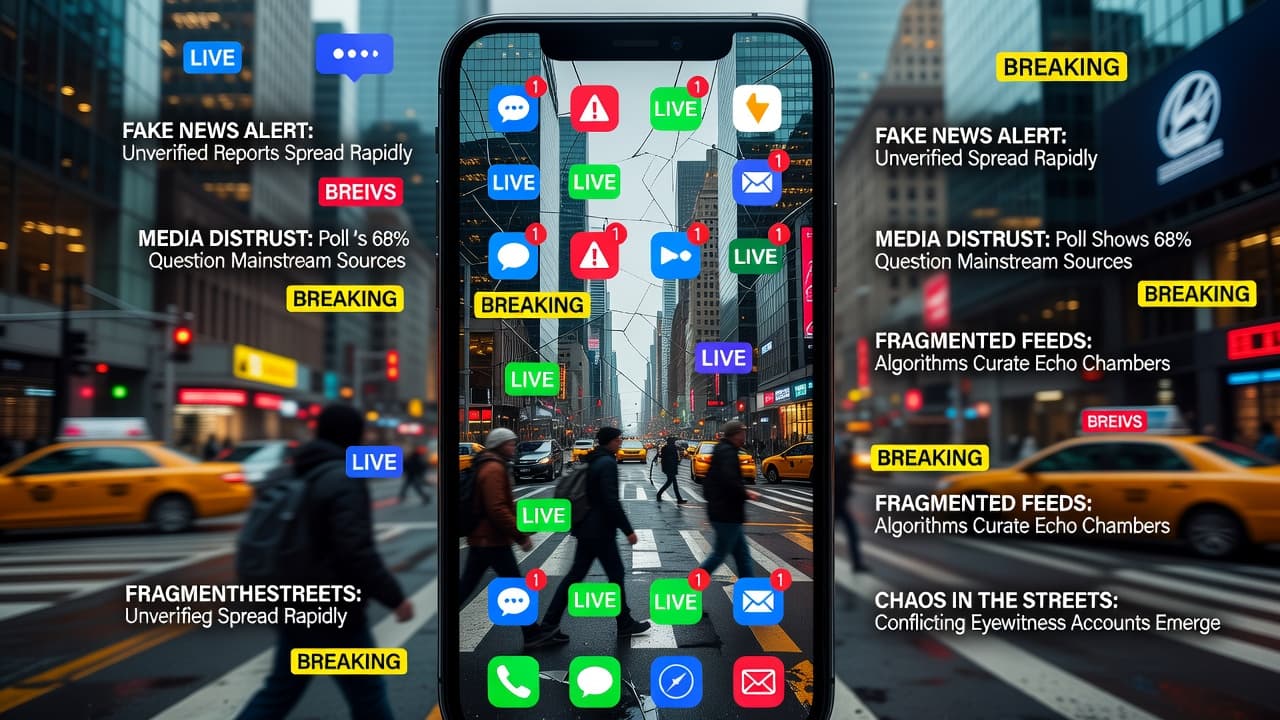
We also have a new habit to contend with, which is scanning before reading. Readers often see the headline, the image, and the first comment before they reach the second paragraph. If the framing feels loose or loaded, they leave with a verdict before they have the facts. This decline in shared understanding impacts community well-being, as residents miss out on the verified local data they need to participate in civic life.
Local desks feel that pressure when they recycle national material because it is cheap and quick. Readers know when a story could have run anywhere, and they can tell when local newspapers have stopped sounding like the voice of the local community they serve.
What Local Newsrooms Can Do to Earn Trust Again
Trust returns when the work feels local again, and when we measure success by the strength of the community rather than just clicks. As many newsrooms transition to a nonprofit organization model, they are increasingly relying on financial support from readers and philanthropic foundations to sustain their mission. This shift allows for a focus on community-focused journalism that serves the public rather than an advertising algorithm. Organizations like the National Trust for Local News are helping to guide this transition, ensuring that community-focused journalism remains a viable pillar of democracy.
Here is where the repair starts:
- Show your work by linking documents, naming meetings, and clarifying what is still unconfirmed.
- Separate news, analysis, and opinion with labels readers can identify immediately.
- Publish corrections where the original story appeared, rather than burying them in a quiet corner.
- Put local journalists back in public spaces, at local government meetings, school board sessions, and neighborhood events, where they can hold political leaders accountable and help improve voter turnout.
- Use a diverse array of local voices, not just the loudest ones in the room.
- Clearly explain how local news outlets are funded, who owns them, and what editorial standards shape their coverage.
None of that sounds flashy, but that is the point. Trust grows when readers can see how a story was built. Readers want evidence, not just confidence, as they evaluate overall journalistic performance. When we look at models supported by the National Trust for Local News, we see that success is defined by long-term impact rather than short-term metrics.
We should also stop treating every story like a race. A slower report that is accurate, specific, and rooted in hyper-local news will outlast ten rushed items with thin sourcing. Readers remember which outlets got it right when it mattered.
When a newsroom admits what it knows, what it does not know, and why it covered the story in the first place, the tone changes. The outlet stops sounding like a lecturing voice and starts sounding like a neighbor with receipts.
Frequently Asked Questions
Why is local news trust declining?
Trust often erodes due to the thinning of newsroom staff and a reliance on generic, imported content that lacks local context. When readers feel that their specific community concerns are ignored or framed through a national lens, they begin to lose confidence in the outlet's purpose.
How can newsrooms distinguish between bias and community concerns?
While bias is a genuine issue, sometimes readers use the term when they feel stereotyped or ignored by coverage that lacks nuance. Newsrooms should address this by seeking out diverse local voices and ensuring that reporting provides a broad, accurate view of the community rather than focusing only on the loudest perspectives.
What role does social media play in the erosion of trust?
Social media creates an environment of information overload where headlines are often shared and debated without context. This speed can turn small errors into major controversies, making it difficult for accurate, thoughtful journalism to compete with reactionary content.
How can a newsroom start rebuilding trust with its audience?
Repair begins with transparency, such as clearly labeling opinion pieces, linking to primary source documents, and publishing corrections prominently. Additionally, putting journalists back in physical public spaces—like school board meetings—reminds the community that the outlet is an active, accountable participant in local life.
Conclusion
When local newspapers lose their connection to the people, public trust begins to fade. This decline in confidence is not the result of a single headline or a bad week; rather, it is the steady feeling that the newsroom has drifted away from the concerns of the local community. To remain relevant, news outlets must ensure their reporting reflects the reality of the people they serve rather than treating them as just another content feed.
The path forward is clear, though it requires intentional effort. We need a visible local presence, transparent labeling, and diligent corrections. Organizations like the National Trust for Local News are working to keep these vital institutions rooted in their neighborhoods. By focusing on the unique needs of the local community and prioritizing accountability, we can rebuild the foundation for local news trust and ensure that readers feel seen and understood.