
A translated quote can be grammatically smooth and still change what a person meant. One missing "not," a softened warning, or an added certainty can turn a careful statement into a headline-making claim.
Checking a news quote translation means more than matching words across two languages. You need to trace the source, compare the meaning, and separate a real error from an editor's fair paraphrase.
The work is slower than sharing a screenshot. It is also the only way to know what the speaker actually said.
Key takeaways
- Start with the original recording, transcript, statement, or full-language document whenever possible.
- Compare meaning, tone, certainty, attribution, negation, idioms, and omissions. A word-for-word match is not enough.
- Treat a short quoted line differently from a longer editorial paraphrase. Both can be fair, but they should not be judged by the same standard.
- Use automated translation to find possible issues, not to settle them.
- For legal, medical, diplomatic, security, or election-related claims, get a qualified human reviewer who knows both languages and the subject.
A translation can be broadly correct yet wrong in the detail that changes the story.
Start with the original source
A quote has a trail. Find it before judging the translation.
News reports may cite a press conference, interview, speech, social post, court filing, government statement, or a reporter's notes. A clipped video may be useful, but it may also begin after the important qualifier or end before the speaker explains the point.
Find the fullest available record
Look for the original-language video, audio, transcript, or document. Official government channels, full event recordings, court records, and named interview outlets are usually better starting points than reposted clips.
Check whether the source is complete. A transcript may leave out laughter, interruptions, or words that were unclear. A video may carry subtitles created by an unknown account. If the report relies on a translation of a live event, see whether the outlet identifies its translator or cites an official interpreter.
The problem is not that every short clip is false. The problem is that a short clip is a snapshot, not the whole record.
Research on reporting quotable yet untranslatable speech describes the basic challenge: when a newsmaker speaks another language, quotation requires translation. That step deserves the same care as the quotation itself.
Confirm who spoke and when
Verify the speaker, date, place, and audience. A quote may be accurate but recycled from an older interview. It may describe a past event, answer a hypothetical question, or respond to someone else's allegation.
Read at least several sentences before and after the disputed line. Then ask what question prompted it. A direct answer can sound more absolute after the question is removed.
If you cannot locate the original source, say so. Do not call the translation false simply because it is hard to confirm.
Compare meaning, not only words in a news quote translation
Literal word matching is a useful first pass. It is not a final answer.
Languages organize ideas differently. A faithful English rendering may reorder a sentence, replace an idiom, or add a few words for clarity. The real test is whether the translation preserves the speaker's claim.
Check certainty, negation, and attribution
Small terms often carry the largest consequences. Compare words that signal certainty or doubt, including "may," "might," "likely," "perhaps," "must," and "will." A statement of possibility is not a prediction. A prediction is not a promise.
Check negation with equal care. "I do not support this plan" cannot become "I support this plan with reservations." The grammar may look neat, but the meaning has moved.
Also watch attribution. "They say the figures are wrong" is different from "the figures are wrong." The first reports another person's claim. The second adopts it as fact.
Names, dates, numbers, and place names need their own check. Transliteration can vary, but a changed number or misidentified official is not a style choice.
Check tone, idioms, and force
A literal translation of an idiom can mislead. Someone might use a familiar phrase to criticize delay, express frustration, or make a joke. Translating its words without its meaning can make the speaker sound harsher, stranger, or more certain than intended.
Tone also matters. An insult, threat, apology, denial, or concession carries force. A translation should not make an evasive answer sound like a clear admission. It should not turn a measured criticism into a personal attack.
We find it helpful to write two short versions during review: a close translation that follows the original structure, and a plain-English rendering of the intended meaning. If both point to the same claim, confidence rises. If they do not, the wording needs more review.
Separate a translation error from editorial paraphrase
Not every difference is an error. News writing often compresses speech, removes repetition, and explains a reference unfamiliar to a new audience.
The line between fair paraphrase and distortion is whether the edited version changes the speaker's position, level of certainty, or stated reason.
A fair paraphrase keeps the claim intact
Suppose a minister says, "We may consider restrictions if the investigation finds evidence." A headline that says the minister "left open the possibility of restrictions" is a paraphrase. It condenses the statement but keeps the uncertainty and condition.
A headline saying the minister "announced restrictions" is different. It removes both "may" and "if," then reports a possible future action as a decision.
Quote marks raise the standard. If an outlet uses quotation marks, readers reasonably expect words that closely reflect the original statement. Minor grammatical smoothing may be normal. Adding a phrase the speaker did not say is not.
Watch for added framing and missing limits
Translations often arrive with surrounding language that shapes how readers see them. An editor may add background, identify a political opponent, or summarize a dispute. Those additions can be useful, but they should not be passed off as part of the quote.
Ask four direct questions:
- Does the translation leave out a condition, denial, or exception?
- Does it add a motive, accusation, or conclusion?
- Does it make the speaker sound more certain or more extreme?
- Are quotation marks used for words that are really an editorial summary?
This is also where language choices can feed media bias and moral division. A loaded translation may not change every word. It can still push readers toward one side before they see the evidence.
Use more than one check
A second translation can reveal a problem. It cannot prove that the first one is wrong.
Independent checks work best when they come from different evidence, not from several outlets copying the same wire report or social media post.
Compare audio, transcript, and independent reporting
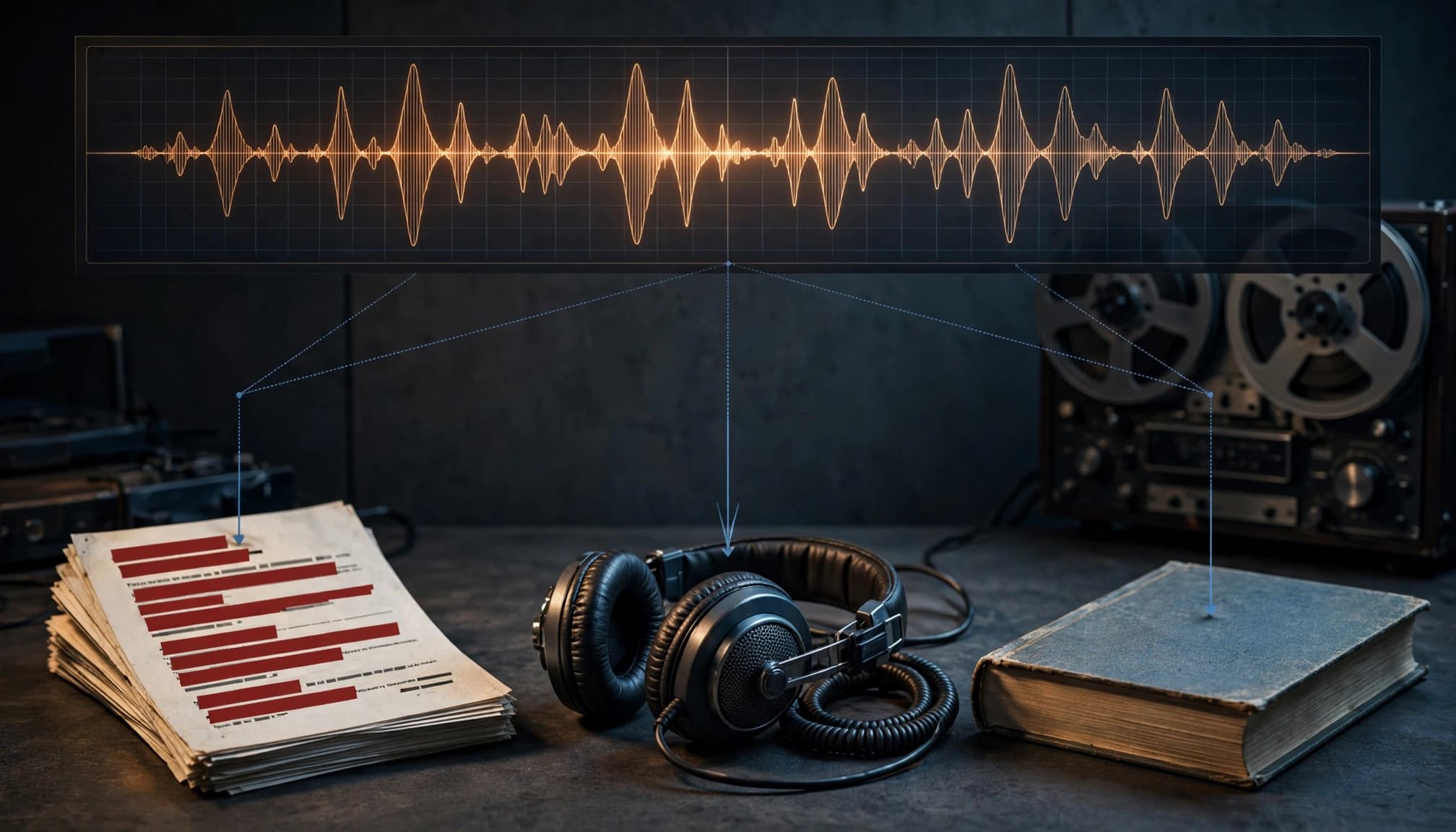
Listen to the audio if you can understand enough of the language to catch pauses, names, emphasis, and obvious qualifiers. Compare it with a transcript, then look for reputable reporting that links to the same primary material.
When original notes are available, use them. Media Helping Media's guidance on translation in journalism warns that back-translating into the source language can introduce new errors. Back-translation can flag a concern, but it should not be treated as proof.
A published transcript may also be imperfect. Check whether it is official, reporter-produced, machine-generated, or edited after the event.
Ask a qualified human reviewer
For an important claim, seek a fluent reviewer with demonstrated knowledge of both languages and the subject. A bilingual speaker may understand everyday conversation well but lack the legal, medical, military, or political vocabulary needed for a high-stakes quote.
Give the reviewer the full source, the disputed translation, and the surrounding context. Ask for a plain explanation of any disputed word or phrase. Ask what alternatives are possible and whether those alternatives change the claim.
Automated tools can help you locate repeated terms or identify a language. They are not definitive. Research on translation errors and new technologies notes limits in handling intercultural differences. That is often where a quote's meaning lives.
Run a practical verification checklist
A simple record keeps the review clear and makes later corrections easier.
Before publishing, sharing, or labeling a translated quote as false, write down what you checked and what remains uncertain.
| Check | What to record |
|---|---|
| Original source | Link, file, event, date, and timestamp |
| Speaker and setting | Who spoke, to whom, and why |
| Exact wording | Original-language text and disputed translation |
| Meaning check | Certainty, negation, attribution, idioms, and tone |
| Independent review | Translator's qualifications and any disagreement |
| Final finding | Accurate, misleading, unsupported, or unresolved |
Do not force every case into "true" or "false." A better finding may be: "The translation captures the broad point but omits a condition," or "The original source could not be located."
The ACM research on translating participant quotes identifies five categories of practices used to support precise and understandable translation. The larger lesson is plain: careful review uses a process, not a single tool.
Report uncertainty and corrections clearly
A correction should show readers what changed. It should not hide the disputed wording behind a vague note that an article was "updated."
Clear language protects readers and gives the original speaker a fairer record.
State the finding in plain terms
If the translation is wrong, identify the part that changed meaning. Quote the original language when practical, provide a reliable rendering, and explain the difference in one or two direct sentences.
For example: "An earlier version translated the speaker as saying the policy 'will fail.' The original statement said it 'could fail,' which expressed a possibility rather than a prediction."
Avoid claiming bad faith unless the evidence supports it. A mistranslation may come from haste, an unclear recording, an idiom, or a copied error. The wording can be inaccurate without proving intent.
Keep the source visible
Link or cite the original recording, transcript, or document when it is public and safe to share. If the source is not public, describe how it was checked and who reviewed it.
Keep the old wording in an internal record, along with timestamps, screenshots, and correspondence. Corrections need a trail. Without one, the same mistake can return in a later repost.
FAQ
Can Google Translate prove a news quote translation is accurate?
No. It can help you spot a possible mismatch or understand the broad subject. It cannot settle tone, idioms, implied meaning, or specialized terms.
Use it as a comparison tool. For claims that could affect a person's safety, reputation, legal position, or public understanding, seek qualified human review.
What if two professional translations differ?
A difference does not automatically mean one is false. Some phrases have more than one fair English rendering.
Compare what both versions say about the core claim. If one changes certainty, blame, timing, negation, or the speaker's stated position, return to the original source and ask reviewers to explain the difference.
Should edited subtitles be treated as direct quotes?
Not automatically. Subtitles often shorten speech for timing and readability. They may be useful summaries, but they are not always close translations.
If a report uses subtitle language in quotation marks, check the original audio or a full transcript before treating it as exact wording.
A careful translation check keeps the record honest
A translated quote is not a small detail when it drives a headline, a public argument, or a correction. The words may travel fast. Their context often does not.
Start with the source. Check the full meaning. Bring in qualified human review when the stakes are high. Accuracy is not a perfect word match. It is a fair account of what the speaker meant.